

heiter magazine

inspiring you to live & style your life so that it feels good

  • SHOP
    • ALL
    • MAGAZINE
    • EVENTS
    • HEITER SOCIETY
    • LIFESTYLE
    • GIFTING
  • BLOG
    • LATEST POSTS
    • DAILY JOY
    • FASHION
    • LIVING
    • RECIPES
    • TRAVEL
    • INTERVIEWS
    • PARENTING
    • BUSINESS
    • DIY
  • THE HEITER SOCIETY
  • EVENTS
  • ABOUT

Words and images by Elisabeth Grindmayer

From Swedish Novent to a Blooming Christmas – a Scandinavian way to make the time between autumn and Christmas more heiter!

November 13, 2026 by Katharina Geissler-Evans in Lifestyle, Heiter recipes

Now it is time for cosiness to move back in!

As autumn slowly turns into winter and the days grow ever shorter, my longing for light, warmth and cosiness grows. One Swedish ‘trend’ that can be observed here in Sweden is the so-called Novent: a cosy in-between period from November until Advent, which shortens the wait for Christmas. Because, let’s be honest, autumn is beautiful as long as the leaves are colourful and glowing outside in all their splendour. But once the leaves have fallen and the days simply become greyer, wetter and darker, there is not much left of that initial autumn high, and Christmas is still a little way off.

So how can we make November feel lovely and heiter anyway? The Swedes have a wonderful answer to this, one which, in my opinion, is well worth borrowing outside Scandinavia too. And that answer is called Novent.

Novent is understood as Advent’s little brother, a kind of small ‘pre-celebration’ (Swedish: förfest). You make your home lovely, put up the first fairy lights, place candles in the windows and decorate your home with natural materials: a few branches from the woods, dried orange slices, perhaps a little moss.
It is not about unpacking all the Christmas boxes already or overloading the house with Christmas decorations – quite the opposite, in fact. Novent is a gentle way of easing into the Advent season to come.

Some people may consider this too early, but I think it is absolutely wonderful and enjoy getting into that cosy mood a little in advance. Completely stress-free and gradually, as the mood takes me, more and more decorations appear. In Sweden, this is also called lagom, which means ‘just right’, not too much and not too little.

With warming comfort food on your plate, you can also start to ease into the cosy season that lies ahead. Culinary moments of comfort are wonderful to share with the whole family or with friends: plan a hemmakväll together, a cosy evening at home spent cooking together in the kitchen.

Perhaps there will be a warming stew made with winter root vegetables, a lovely soup, or baked apples filled with raisins, nuts and honey. In my opinion, a rainy November afternoon is the perfect time for baked apples. Serve them with homemade vanilla sauce, then snuggle up on the sofa with woolly blankets.

Another lovely Scandinavian trend that fits perfectly with the new heiter Blooming issue and with November is julblommor (Christmas flowers).
Julblommor _Elisabeth Grindmayer_72 dpi-8515_websize.jpg
Julblommor _Elisabeth Grindmayer_72 dpi-8552_websize.jpg

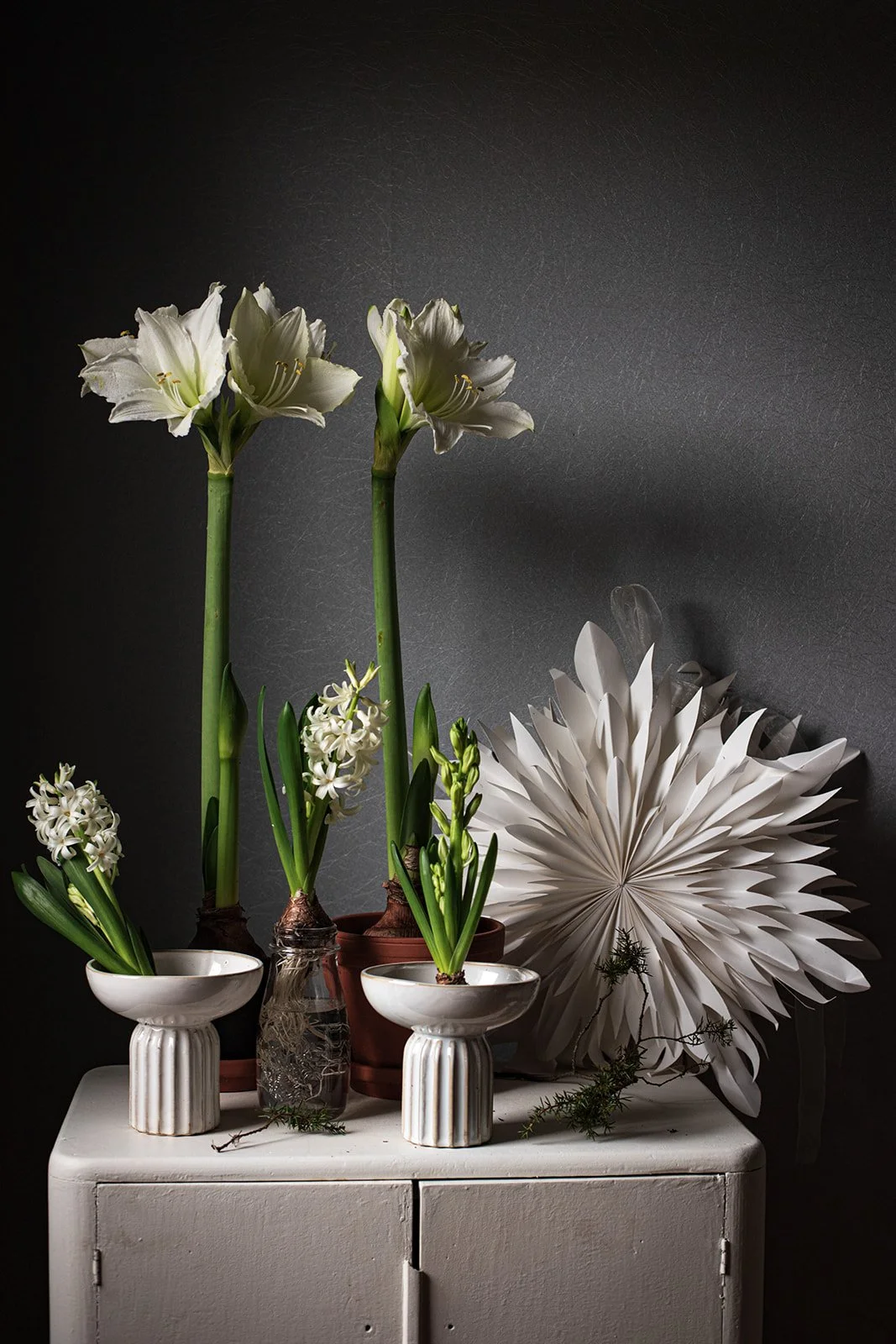
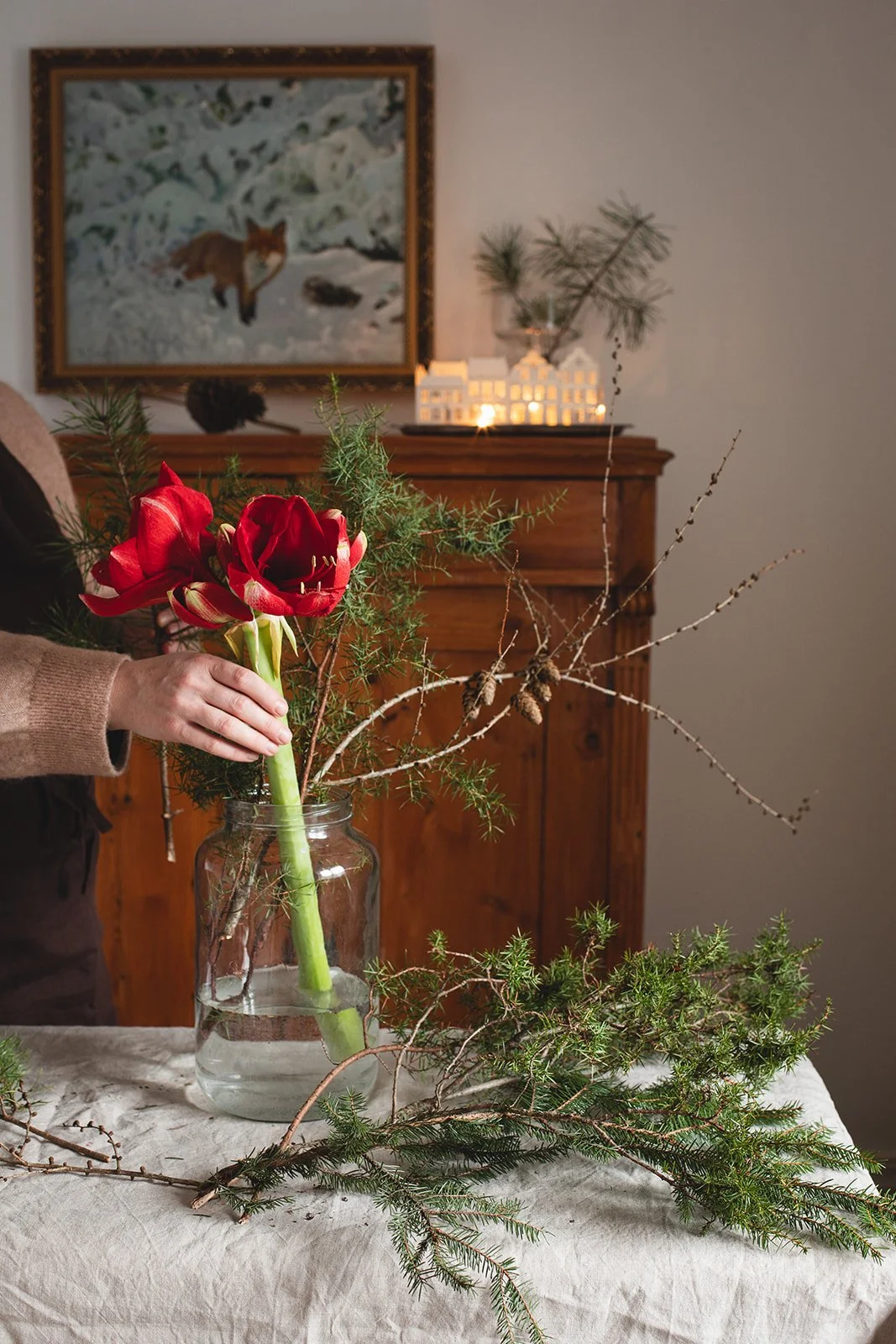
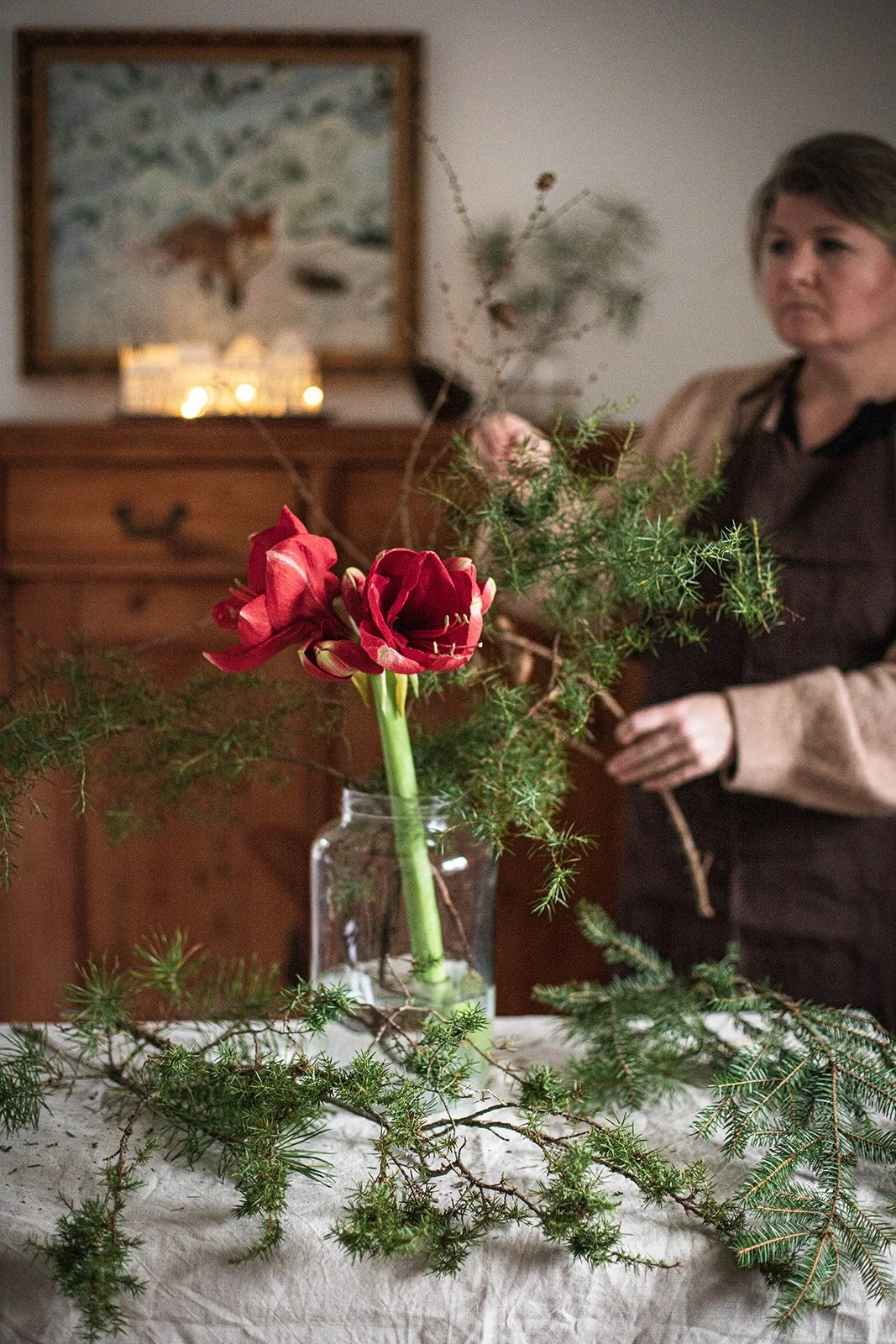
The amaryllis is a very typical Christmas flower in Sweden. If you plant an amaryllis bulb at the beginning of November, then, with a little luck, you can enjoy its magnificent bloom just in time for Christmas. To do this, place the bulb in a pot and cover it with soil to only about a third of its height. Then water it lightly and keep it in a cool but bright spot in the house until it begins to sprout.

As soon as the first shoots appear, the amaryllis can move to a warmer place, for example, the living room. From then on, water it regularly but sparingly, so that the bulb does not rot.

If you would prefer less effort, you can also buy amaryllis already pre-grown in a pot or as cut flowers. I like to arrange them in a simple vase with just a few branches from the woods. A few amaryllis and hyacinths grouped together as a little floral still life on a sideboard or small table also look lovely. It is understated, yet no less impressive thanks to their dreamy blooms.

Have a lovely Novent!


So that we can enjoy this time of the year even more, writer and photographer Elisabeth Grindmayer has also shared a lovely seasonal recipe with us:

The perfect Novent Recipe: Baked Apples with Vanilla Sauce

Serves 4

For the baked apples:

4 large apples

60 g walnuts

2 tbsp blackberry jam

1 tbsp honey

4 tbsp raisins

4 tsp butter

For the vanilla sauce:

500 ml milk

10 g cornflour

1 egg yolk

30 g sugar

1 pinch of ground vanilla

You will also need: An apple corer

Preheat the oven to 230 °C. Wash the apples and remove the cores using an apple corer. Finely chop the walnuts and mix them with the blackberry jam, honey and raisins. Fill the apples with the walnut mixture, place them in an ovenproof dish and put 1 tsp of butter on top of each apple. Bake the apples in the hot oven for approximately 20 minutes.

For the vanilla sauce, whisk 3 tbsp of the milk with the cornflour, egg yolk and sugar until smooth. Bring the remaining milk to the boil with the vanilla in a small saucepan. Stir in the egg yolk mixture, bring everything briefly to the boil once and immediately remove from the heat.

Arrange the baked apples on plates and serve warm with the vanilla sauce.

Firm, tart winter apples (such as Boskoop or Rheinischer Bohnapfel) are best suited for making baked apples.

About: Elisabeth Grindmayer lives with her family on a 100-year-old forest farm in the heart of the wild nature of southern Sweden. As a freelance photographer and writer, she works for magazines, publishers and brands, with a particular focus on food, gardening and slow living. On her blog, Slow Nordic Seasons (slownordicseasons.com), she shares her love of mindful living, the kitchen garden, seasonal recipes and Scandinavian traditions.
November 13, 2026 /Katharina Geissler-Evans
scandinavian christmas, sweden lifestyle, novent
Lifestyle, Heiter recipes
Comment

Words by Kendall Marie Platt, main image by Andrea Gilpin (first published in heiter issue 1, New Beginnings)

4 reasons to love gardening for your mental health

April 29, 2026 by Katharina Geissler-Evans in Lifestyle

It is so easy to view gardening as a chore or another thing to tick off the to-do list. In this article I'm sharing some of the reasons why gardening is so good for your mental health and position it as the way to lower your stress levels, release some of the pressure you are under and avoid burnout. 

1. Gardening lowers your stress levels

The reason gardening and horticultural therapy specifically is so good for lowering your stress levels is because it helps you complete the stress cycle.

Every day stressful things happen and most of us shove them deep down inside, carry on with our day and try and forget about them. But no matter how much you try, that stress sits festering inside of you and raises your stress levels. 

Getting out in your garden, and practicing some horticultural therapy exercises even for 20 minutes can help complete the stress cycle and get the day’s stresses out of your system.

2. Helps quiet your mind

Whether you have a neurodivergent brain like me or you are just juggling a lot, it can feel like you’re drowning in the noise.

Daily time in your garden helps you to turn the dial down on the noise in your head and give you some much needed peace and quiet.

The repetitive actions of gardening help you to quickly get into the flow state where your brain can find some silence.


3. You create a beautiful space that holds you

As women we are under so much pressure juggling all the things. We’re often caring for kids or elderly parents, working to pay the bills, trying to cook and eat nutritious food, get your 2L of water in each day, move your body to get strong AND carve out just a little bit of time for you every day.

It’s exhausting and it’s time to create a space that holds you so you don’t have to hold it all alone anymore.

Your garden gets to be your sanctuary.

And the best bit is that because it’s right on your doorstep you don’t need to book into a yoga class or a therapy session to feel held, you can access it whenever you need to.

4. Helps you grow your self worth

Whether you’ve been knocked by redundancy, the constant judgement from others in motherhood, divorce or separation, workplace bullying or just life, your self worth takes a battering.

Growing beautiful flowers to bring you joy and delicious food to feed yourself and your family will help you improve your self worth, self confidence and begin to trust in yourself and your abilities again.

If you are ending the day feeling tired but wired, like nothing is going right and with a head that feels like it's about to explode, first know that you are not alone and secondly know that horticultural therapy can help you.

The way to think about your garden is not another thing to beat yourself up over because you haven't ‘sorted it out’ but that it gets to be your therapy space, a place where you can finally exhale and let all of the stresses of the day out into the soil.


Kendall Marie Platt is a Horticultural therapist & space holder for garden curious women. She is the founder of Adventures with Flowers and helps women create beautiful gardens in small pockets of time. She does this through 1:1 work and her membership the Seed, where she hosts regular garden-along sessions to help attendees quiet their minds as they take action in their garden.

Kendall is a writer, speaker and facilitator who has spoken at events and for organisations on the topic of using horticultural therapy to reduce stress and avoid burnout as well as hosting hands-on horticultural therapy workshops in corporate and event settings.


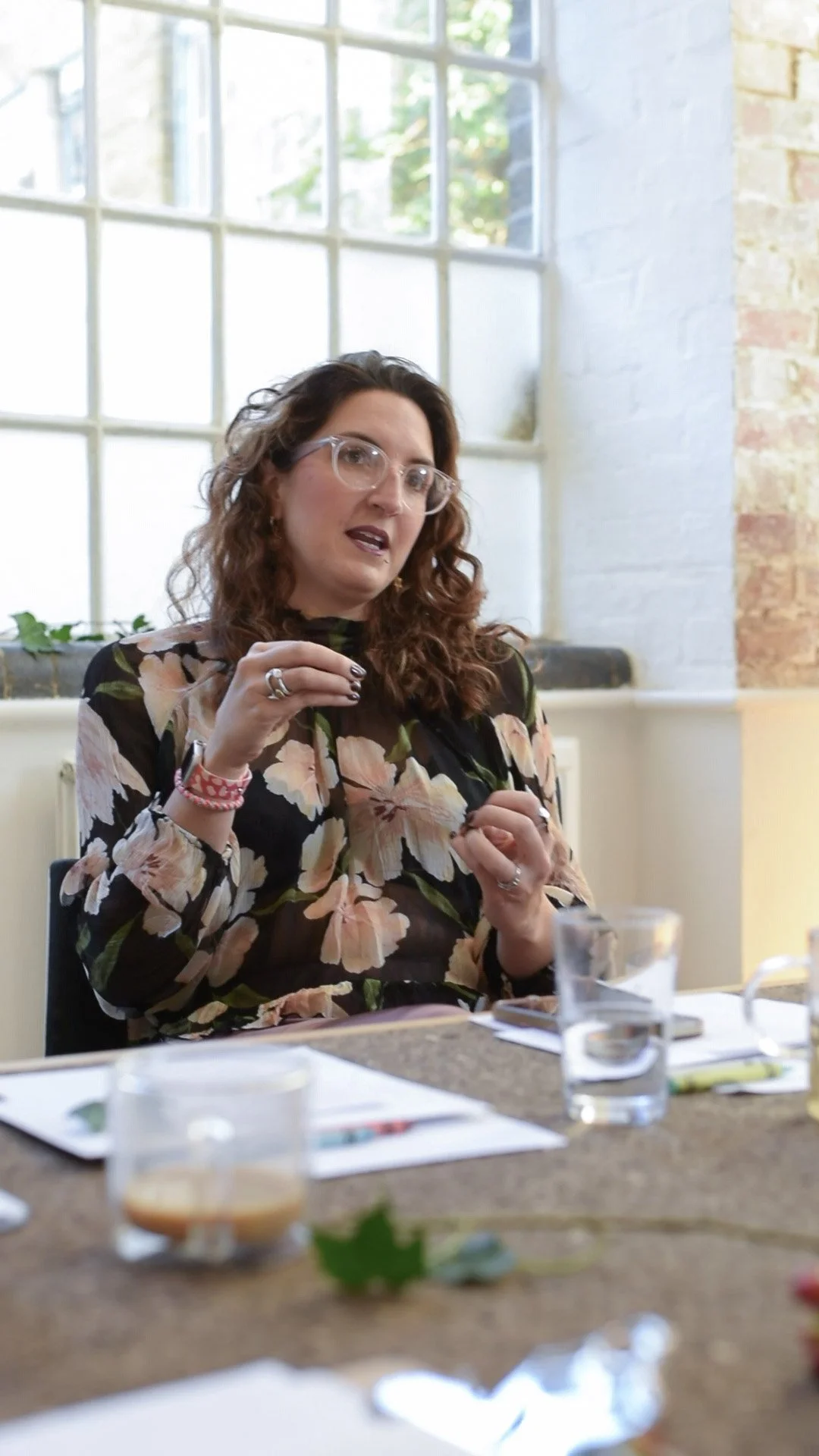
Kendall Marie Platt during the heiter “Homecoming in Winter” event in London last year. Image by Özge of @lens.and.she

We wanted to get to know Kendall and her work a bit better. This is why we sat down with her for a little interview. Our conversation is now ready for you to read here:

heiter: Can you take us back to the beginning of your gardening journey? What first drew you to working with nature, and how did it evolve into the work you do today?

Kendall: I started gardening because I had a garden that needed doing.  It was during a very stressful time of my life but I didn't view it as something that would help me, I just saw it as another thing on the to-do list.  But once I started gardening, I realised it was the first time in my life that my brain had been quiet. The noise had been turned down on my inner (often very negative) narrative.  It was heaven.

I knew there must be other women out there who felt the same as I did and that gardening could help them, so I started running workshops and then eventually added 1:1 horticultural therapy work and an online membership.

heiter: Your work beautifully connects gardening with emotional wellbeing. For someone who might be struggling with their mental health, how can being in the garden support them in a gentle and accessible way?

Kendall: Sometimes it isn't even about doing anything in the garden. Simply sitting with the sun on your face and noticing the growth happening around you can connect you with a sense of hope and joy. We are often so busy that we don’t have the time to stop and notice. Often once we stop, difficult emotions can come up for us and I teach my clients horticultural therapy activities to help them process those emotions so that they can move forward.

heiter: For those who feel overwhelmed, exhausted, or unsure where to begin, what’s a simple first step they can take to start gardening without it feeling like another thing on their to-do list?

Kendall: Create yourself some gorgeous pots to sit either side of your front door. They will raise your mood and boost your energy every time you come in or out of the front door. Starting with one small project first and showing yourself that you can do this gardening thing will give you a big dopamine hit and allow you to grow your confidence. Be really present while you’re gardening and soon your brain will come to view gardening as an enjoyable pastime rather than a chore.

heiter: At heiter, we often talk about finding small moments of joy in everyday life. What does a mindful moment in your garden look like for you, and how can others begin to create that for themselves?

Kendall: I love checking my seedlings. Really being present and engaging my sense of sight as I look for those little green shoots. Buy yourself some pots, compost and a packet of seeds, cosmos are a really pretty, easy to grow flower, and sow some seeds for yourself. Engage your senses as you check in on them daily while you’re waiting for the kettle to boil. Plunge your finger into the soil to see if they need water (if it feels wet they don’t, if it feels dry they do) and very quickly you will start to see the seedlings emerging.

heiter: For readers who feel drawn to your approach, how can they work with you, and what kind of transformation or feeling do you hope they walk away with?

Kendall: I work with people online offering both 1:1 horticultural therapy support and group support through my horticultural therapy membership.  After we’ve finished working together they will have a garden sanctuary that holds them through life's ups and downs so that they don’t have to hold it all alone.  They’ll feel calmer, more confident, and have more energy because they’ll be taking 20 minutes in the garden for themselves every day.


April 29, 2026 /Katharina Geissler-Evans
gardening, growing flowers, well-being, mental health
Lifestyle
Comment
  • Newer
  • Older
 

FEATURES & PRESS MEDIA KIT PARTNER DIRECTORY WORK WITH US STOCKISTS

© 2025 heiter magazine. All rights reserved.

Impressum | Imprint Delivery & Returns Privacy Policy