
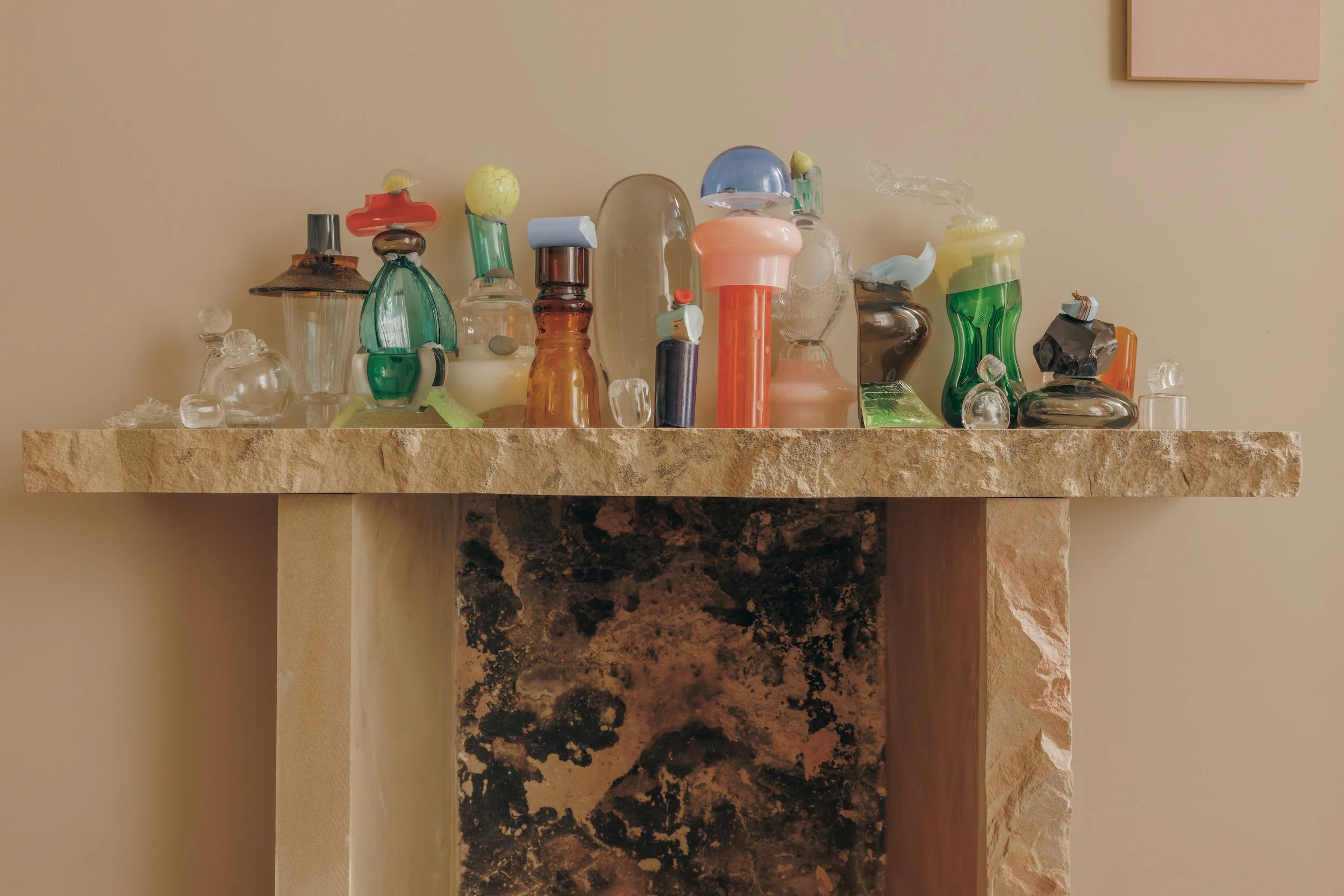
La Casita: a colourful, considered home for glass artist Juli Bolaños-Durman
“Homecoming” can have different shapes and forms. This is also something Costa Rican glass artist Juli Bolaños-Durman explored when creating La Casita—“the wee house”, her new home and creative anchor. Designed in close collaboration with Architecture Office, the Edinburgh-based project brings together colour, curiosity, and conscious making, resulting in a space that feels both deeply personal and quietly radical in its approach to reuse.
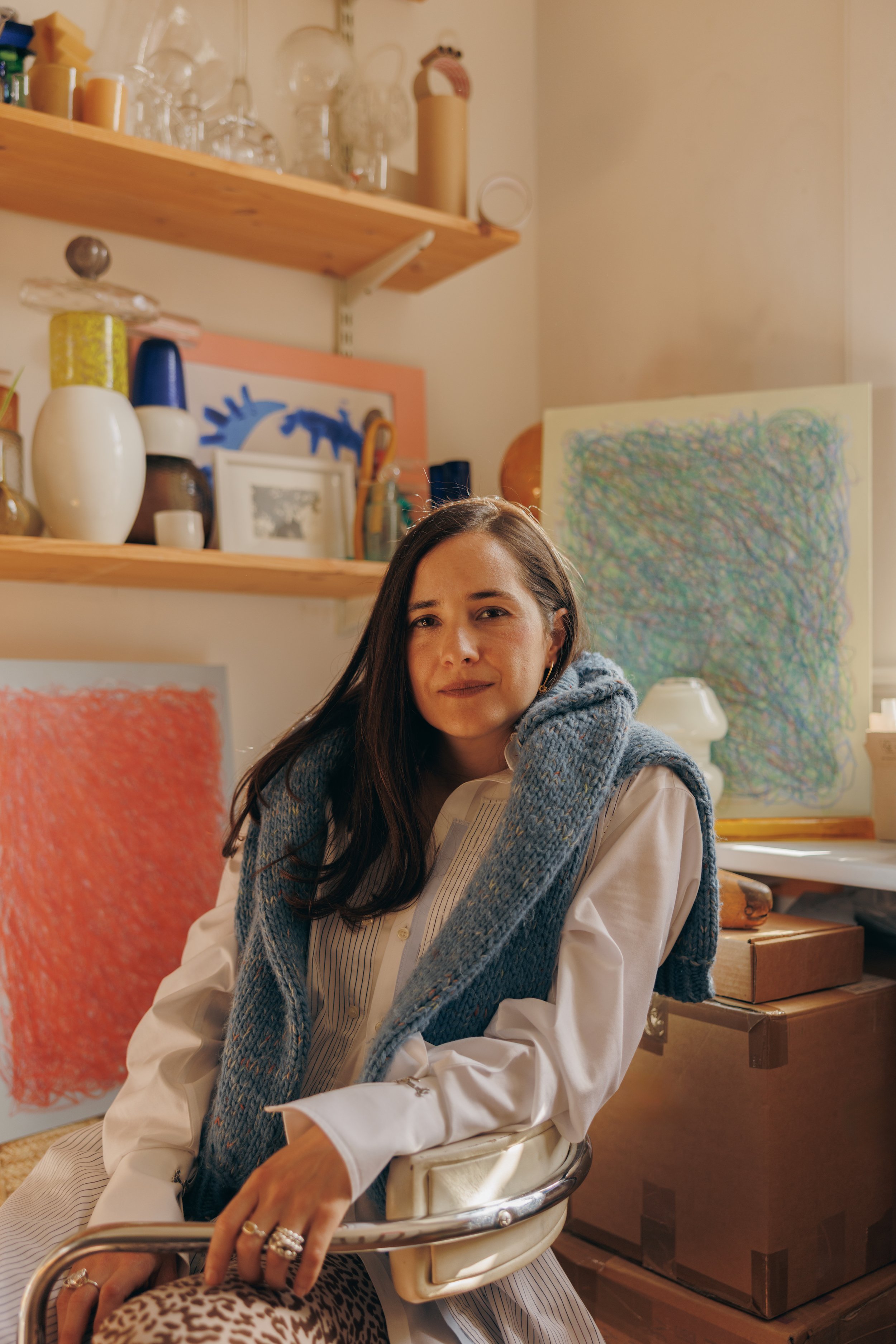
Juli
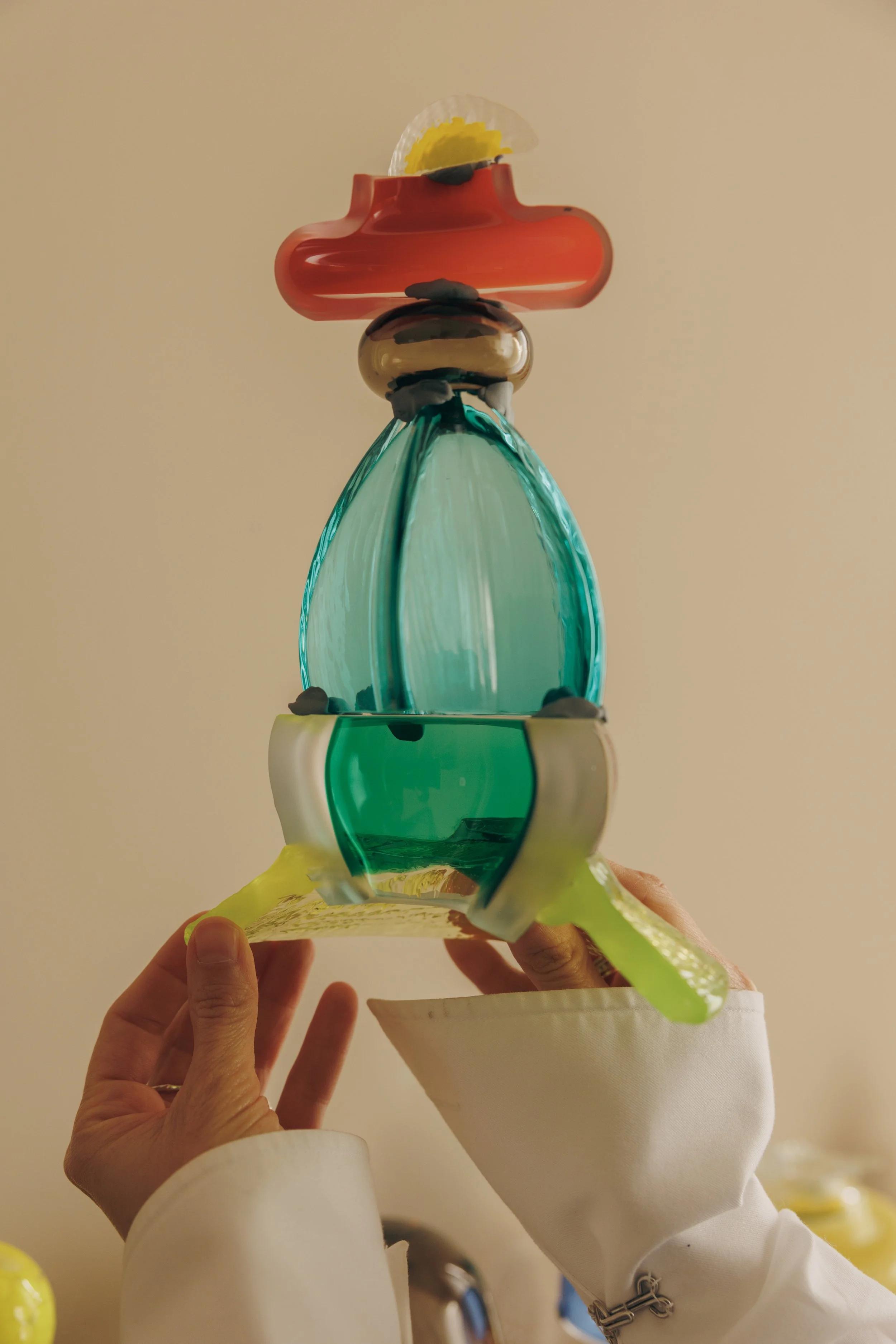
Known for transforming discarded glass into joyful, sculptural pieces, Juli approaches her work with a sense of care for the overlooked and a fascination with imperfection. That same philosophy runs throughout La Casita. Every room is shaped by resourcefulness—materials reclaimed, repurposed, and given new life—while still honouring the character of the Victorian building beneath.
Architecture Office, led by Alexander Mackison, embraced this ethos from the outset. Rather than imposing a fixed aesthetic, the design evolved through a “material-first” process, letting found objects, offcuts, and reclaimed elements guide decisions. The result is a home that feels intuitive and lived-in, crafted through collaboration with local makers who share the same reverence for craft.
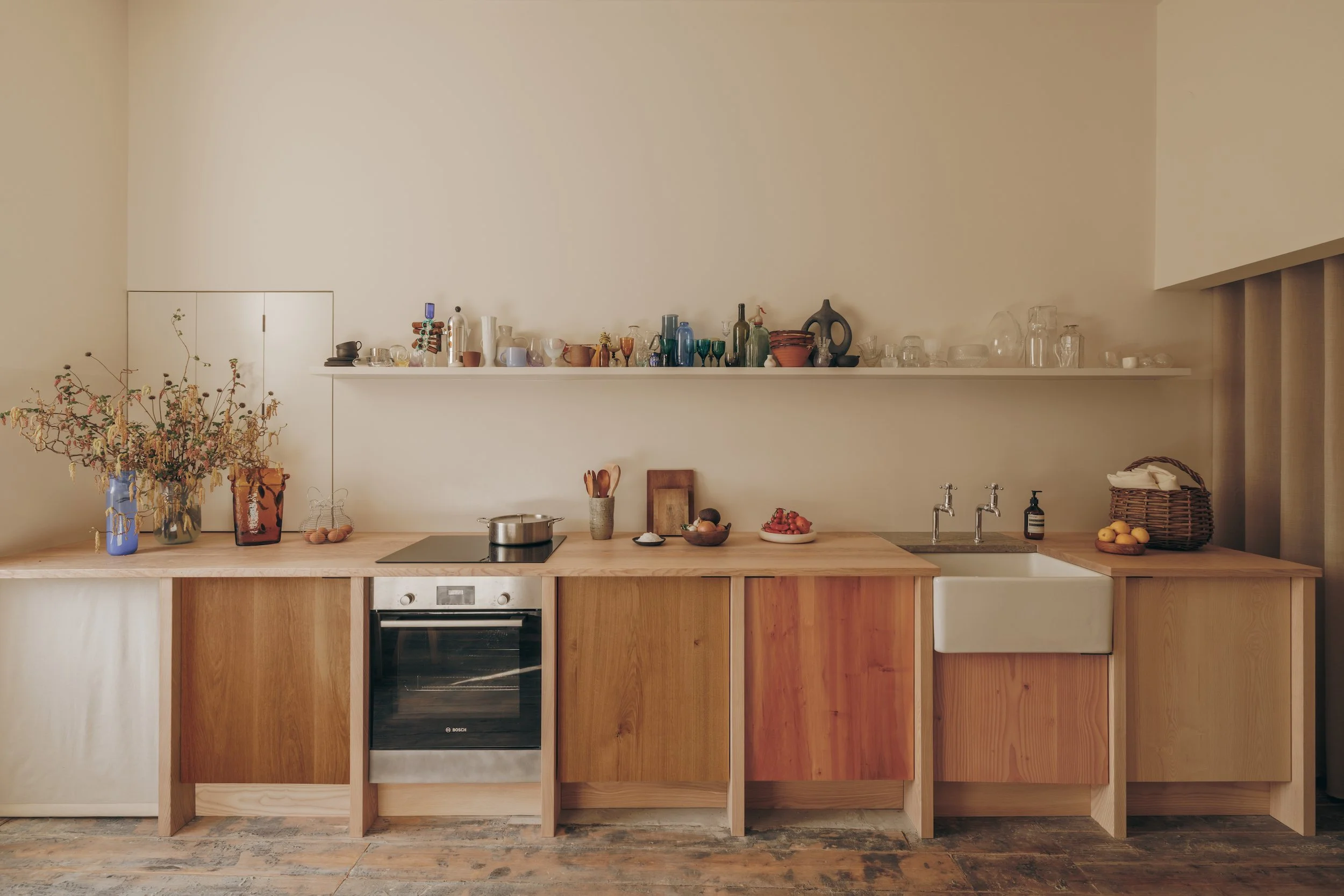
The kitchen
At the heart of the flat sits a bespoke kitchen built by Studio Silvan almost entirely from surplus timber. A gradient of Brown Oak, Oak, Cherry, Douglas Fir, and Ash forms a gentle patchwork—each species celebrated for its natural tone and texture. Even the internal carcasses are formed from repurposed Valchromat, revealing flashes of colour behind the refined fronts. It’s a space that feels warm and tactile, a quiet celebration of sustainable Scottish craftsmanship.
Stone, too, plays a playful role. Offcuts supplied by Britannicus Stone—Frosterley, Ledmore, Swaledale Fossil and Stoneycombe—have been arranged according to the sizes they arrived in, creating a joyful, almost puzzle-like surface language across the home. In the living room, a forgotten firebox led to the creation of a sculptural mantelpiece: three rescued slabs from local mason AB Mearns, assembled into a monolithic, almost totemic form. With raw edges intentionally left exposed, the fireplace becomes a grounding point—a moment of honesty within the room.
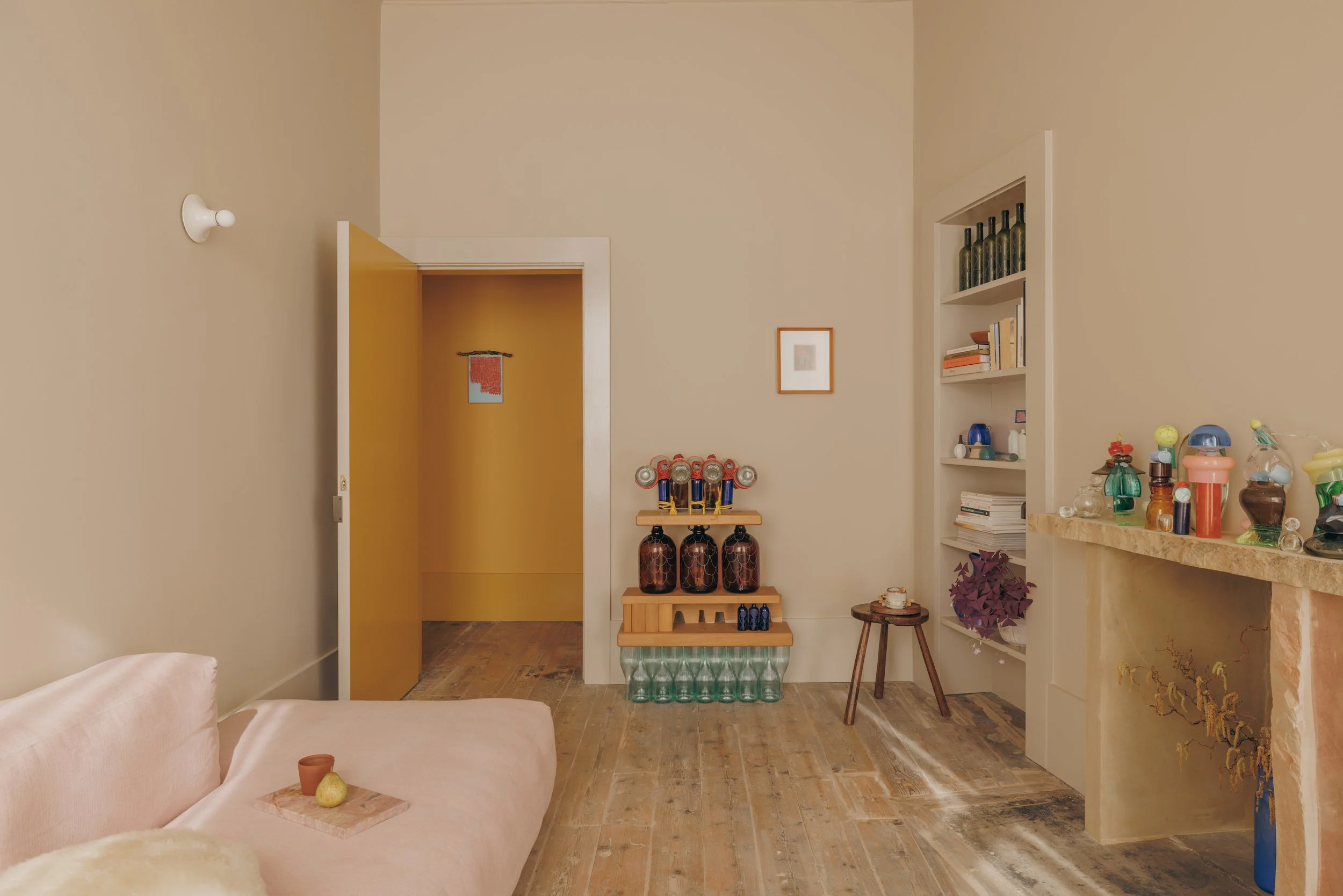
The living room
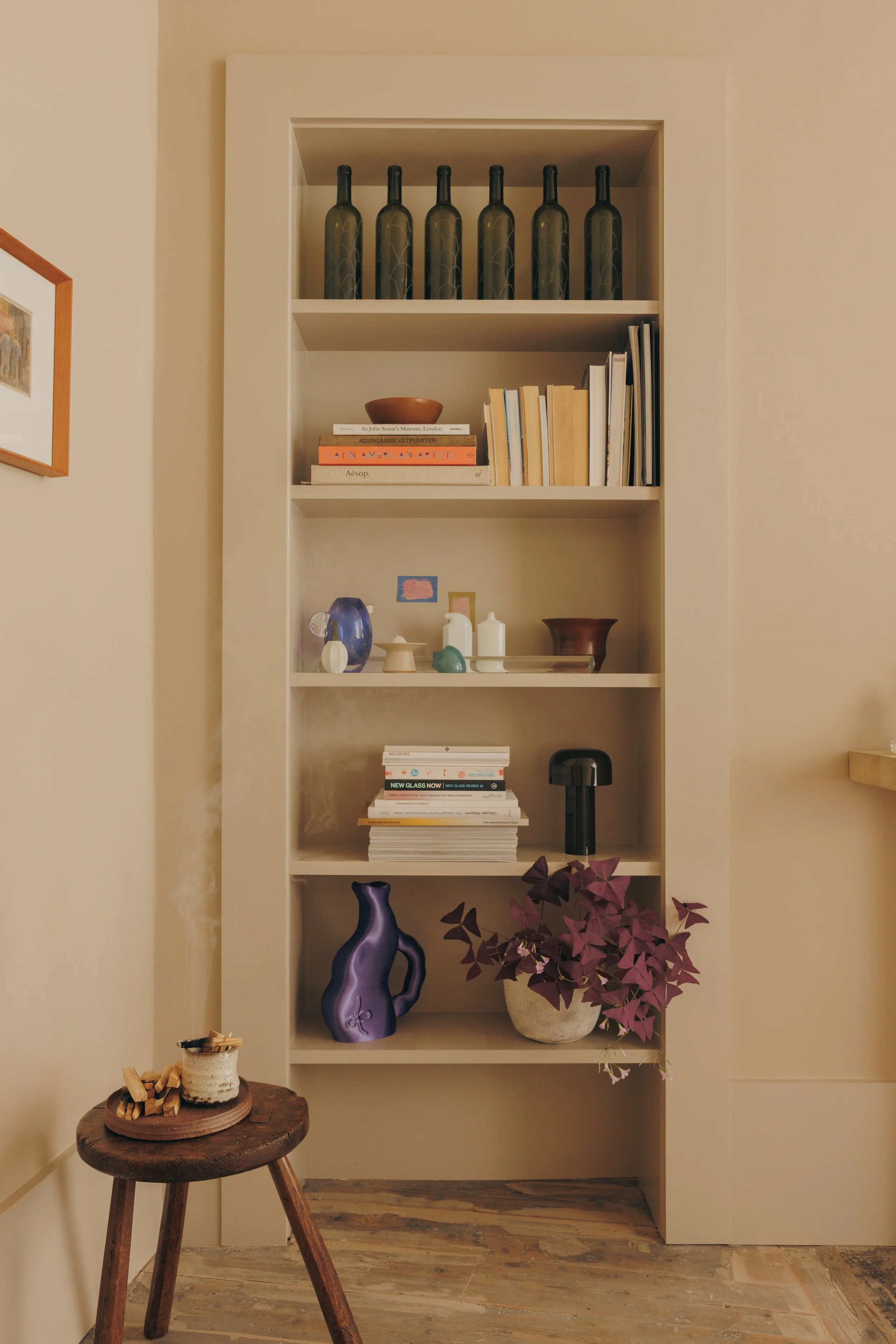
The palette stays gentle. Walls painted in Little Greene’s Re:mix range provide a soft background that lets Juli’s vibrant objects shine. But there are bursts of joy, too: a corridor painted a striking, sunny yellow, inspired by the Cortez Amarillo tree from Juli’s hometown. It casts warmth into the surrounding rooms, softening the Victorian bones and anchoring the space with a sense of home.
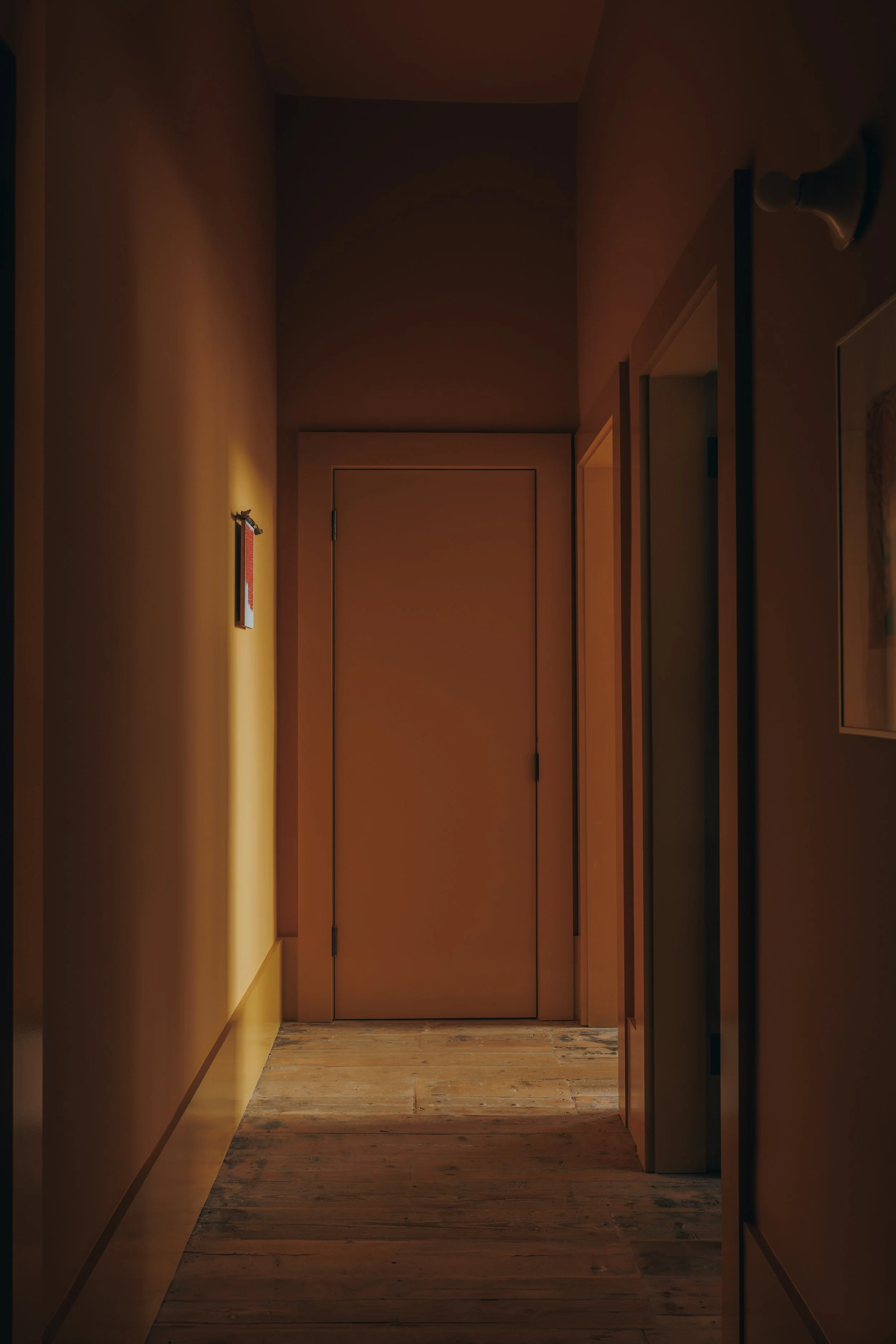
The hallway
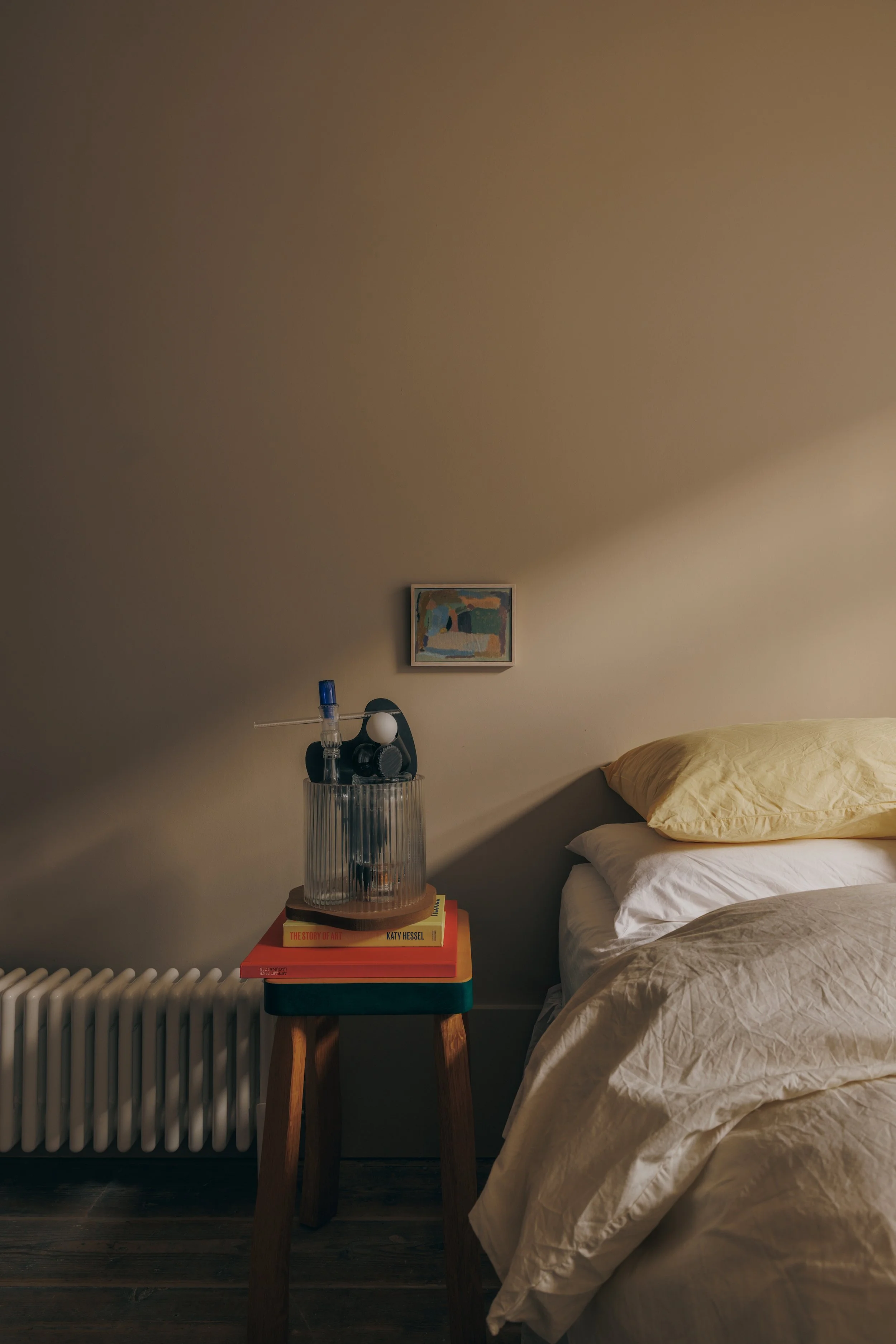
The bedroom
True to Juli’s practice, La Casita is also a living gallery—a place where her collected treasures, from glassware to ceramics, can be arranged and rearranged. As she describes it, “These everyday items surround and inspire me, each one a beautifully humble moment.”
More than a renovation, La Casita is a conversation—between artist, architect, and the community of makers who contributed. It’s a reminder that originality doesn’t need to come from newness. Beauty can be coaxed from what’s already around us, waiting to be noticed. Architecture Office’s Alexander Mackison reflects this spirit well: “The project became an exercise in composition and balance… allowing the materials to speak for themselves.”
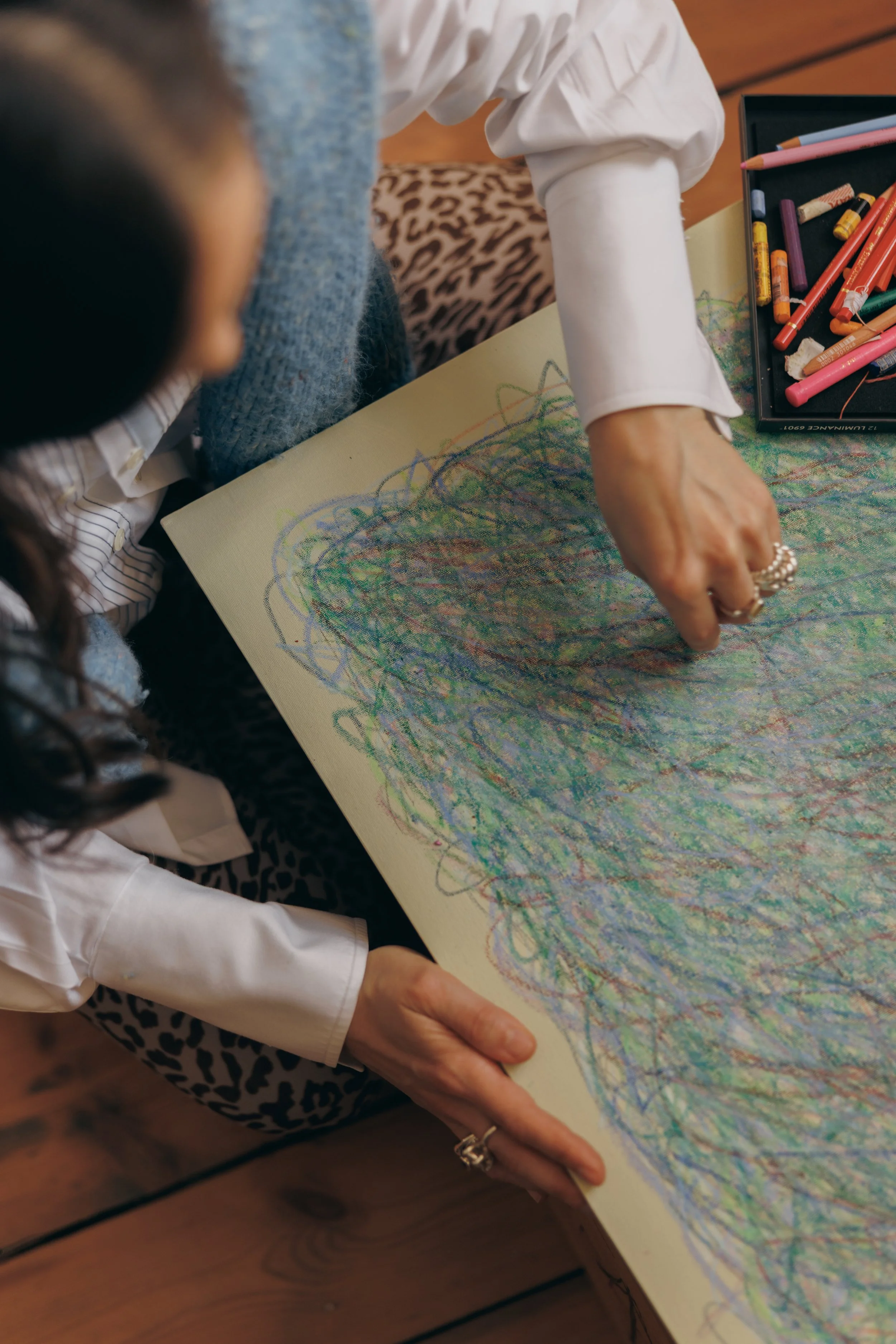
In its quiet, joyful way, La Casita poses a gentle challenge: to look again at what we discard, to value local surplus, and to open ourselves to the possibilities in reuse. It’s a home shaped with compassion and ingenuity—a small, bright example of how thoughtful design can nurture both the everyday and the extraordinary.